Here’s What You Should Know Before Buying a Power Bank
There is nothing worse than watching your phone slip into the dreaded low-battery zone right when you need it most. Maybe you are traveling, navigating with GPS, taking photos on a day trip, or heading into a long shift without a charger nearby. That sinking feeling of seeing your screen fade to black is exactly why power banks have become one of the most essential pieces of everyday tech. But even though everyone needs one, most people do not know how different they can be. A bad power bank can take forever to charge your phone, feel like a heavy brick you never want to carry, or fail the moment you need it.
This guide walks you through everything you should know before buying a power bank. You will learn how capacity actually works, how fast your devices can charge, which ports matter, and which features are worth paying for. Along the way, I will highlight some great options that real users love so you can pick the perfect model for your lifestyle. Whether you want something small enough for your pocket or something capable of powering your laptop on a flight, you will find the right fit here.
More From GET WIRED UP NOW
What Does “mAh” Mean — and How Much Do You Need?
You will see the letters “mAh” everywhere when you shop for a power bank. This stands for milliamp hours, which is just a technical way of showing how much energy the battery holds. Here is the part most people do not realize: a power bank never delivers its full listed capacity. Some energy is always lost through heat and internal conversion. So a 10,000 mAh power bank does not actually charge your phone twice. It usually gives you a charge and a half for most modern smartphones. Below is a estimate of how much charge you can get out of common mAh values.
- 10,000 mAh ≈ 1.5 charges of most modern iPhones
- 20,000 mAh ≈ 2.5–3 full phone charges
- 30,000+ mAh ≈ multiple days of charging or laptop-level power
If you just need a daily backup, 5,000–10,000 mAh is fine. For travel or usage of high-drain apps, go for 20,000 mAh. And for laptops, you’ll want 20,000–30,000 mAh with 65W+ output.
Wattage Controls Speed
Wattage is simply how fast power flows from the power bank to your device. In other words, wattage tells you how fast your device will charge. Many people focus on mAh and forget about wattage, but this is just as important. Lower wattage means your phone charges slowly. Higher wattage means fast charging, and in some cases, the difference can be dramatic. The higher the wattage, the faster it can charge:
- 10–20W: Standard phone charging
- 30W: Fast charging for phones + tablets
- 45W: Fast charging for larger tablets + some laptops
- 65W–100W: High-speed laptop charging / multi-device charging
If you want fast charging on your phone (iPhone or Android), look for at least 20 watts. Tablets often need 30 watts or more. Laptops need much more power and usually require 45 watts up to 100 watts depending on the model. Always match the wattage of your power bank to the device you want to charge.
Anker Prime 20,000 mAh 200W Power Bank

This one is perfect for people who need speed. With 200W output, it can fast-charge a MacBook, Steam Deck, iPad Pro, Nintendo Switch, or flagship Android phone. It’s premium, fast, and exceptionally reliable—ideal for travelers or tech lovers who want one bank that does everything.
Why USB-C Matters
When you look at a power bank, you will usually see two types of ports. USB-A is the older, rectangular port that most people grew up with. USB-C is the newer, oval-shaped port that charges faster, supports modern devices, and lets you recharge the power bank itself much more quickly. If you are choosing between the two, always choose USB-C. It is faster, safer, and more future-proof. Try to avoid power banks that only have USB-A ports. They are slower and will feel outdated right away.
A great budget-friendly pick is the Anker Nano 10,000 mAh 30W Power Bank. It is affordable, slim, and has USB-C in and out, which gives it a big advantage over older models in the same price range.
Understanding PD and QC
When you shop, you will notice two charging standards that show up frequently. One is called PD, which stands for Power Delivery. The other is called QC, which stands for Quick Charge. Power Delivery is the modern standard used by USB-C devices. It is faster, safer, and works with most new phones, tablets, and laptops. Quick Charge is mainly used for older Android devices. It still works well but is not as universal. A high-quality power bank usually supports both. This helps you stay flexible no matter what devices you use.
Size and Weight Matter More Than You Expect
Even the best power bank will not help you if it is too bulky to carry. Many people buy huge 30,000 mAh models thinking they will use them every day. Then they realize they do not want to carry a heavy block around and it ends up in a drawer.
Think about how you plan to use your power bank. If you want something for everyday errands, a small 5,000 or 10,000 mAh model is perfect. If you want something for travel, especially long days without outlets, 20,000 mAh is much more practical. The Anker Nano 5,000 mAh Ultra-Slim Magnetic Power Bank is a perfect lightweight choice for iPhone users. It snaps to the back of your phone and feels almost weightless. It is wonderful for concerts, nights out, and busy weekends when you do not want to carry cords.
Airline Rules for Power Banks
If you travel often, you must know the rules around bringing batteries onto airplanes. Power banks are not allowed in checked baggage. You need to bring them in your carry-on. Airlines also limit the battery size passengers can bring. Anything under one hundred watt hours is allowed without approval, and this covers most consumer power banks.
To convert mAh to watt hours, you can divide by 1,000 and multiply by 3.7. Anything under roughly twenty seven thousand mAh is safe to take on your flight.
One powerful travel-safe option is the Anker 737 Power Bank. It has a capacity of 24,000 mAh and stays under the limit for airline safety. It is a favorite among travelers who want to charge laptops during long flights.
Do Not Ignore Safety Features
Cheap power banks can be dangerous. They may overheat, cause battery swelling, or damage your phone. Good brands include temperature management, short-circuit protection, and overcharge protection. These features help keep your devices safe and extend the life of the power bank. If you want something that is known for safety, the Belkin BoostCharge 20,000 mAh Power Bank is a safe and reliable option. Belkin has a long-standing reputation for making quality charging accessories.
How Fast Should a Power Bank Recharge Itself?
Older power banks could take the entire night to recharge. Modern ones with USB-C input can recharge much more quickly. A 20,000 mAh model usually takes around three to four hours with fast charging. A 10,000 mAh model may take only about two hours. A faster recharge time means you spend less time waiting and more time using your devices.
Do You Need More Than One Port?
Think about your daily routine. If you only charge your phone, a single USB-C port is enough. If you want to charge multiple devices at the same time, such as your phone and earbuds, or your phone and tablet, look for two or three ports. A good multi-port power bank will have one high-power USB-C port for your main device and additional ports for smaller accessories.
The Ugreen 145W 25,000 mAh Power Bank is an amazing multi-device option. It can charge a laptop, a phone, and another device at the same time. Travelers and remote workers love it because it handles everything in one package.
Should You Get a Wireless or Magnetic Power Bank?
Wireless charging feels convenient, and magnetic charging is even better. You simply attach the battery to the back of your phone and it starts charging. The only downside is that wireless charging is slower and less efficient. You lose some energy during the process, so your phone charges more slowly than it would with a cable. If convenience matters most, this is still a great feature. If you want the fastest charge, stick with wired charging.
The Anker 622 MagGo Magnetic Battery is one of the most popular MagSafe options for iPhone users. It doubles as a folding stand, which makes it perfect for watching videos or FaceTiming while you charge.
Laptops Need a More Powerful Bank
If you want to charge a laptop, there are three things you must check. The output needs to be strong enough. The port must support Power Delivery. And the battery needs to be large enough to make a difference. Most laptops require somewhere between forty five and one hundred watts. This information is usually printed on your laptop charger. Choose a power bank that matches or exceeds that wattage. Also, choose something with around twenty thousand mAh or more so you get a meaningful amount of power.
Power Banks for Travel
If you travel often, especially internationally or on long flights, the right power bank can make your trip so much easier. Look for something in the twenty to twenty four thousand mAh range. You also want fast recharge times, multiple ports, and ideally a screen that shows your battery percentage. The Anker 737 is the ideal travel power bank for people who need to charge multiple devices and keep their laptop running during long travel days.
Options for Gamers
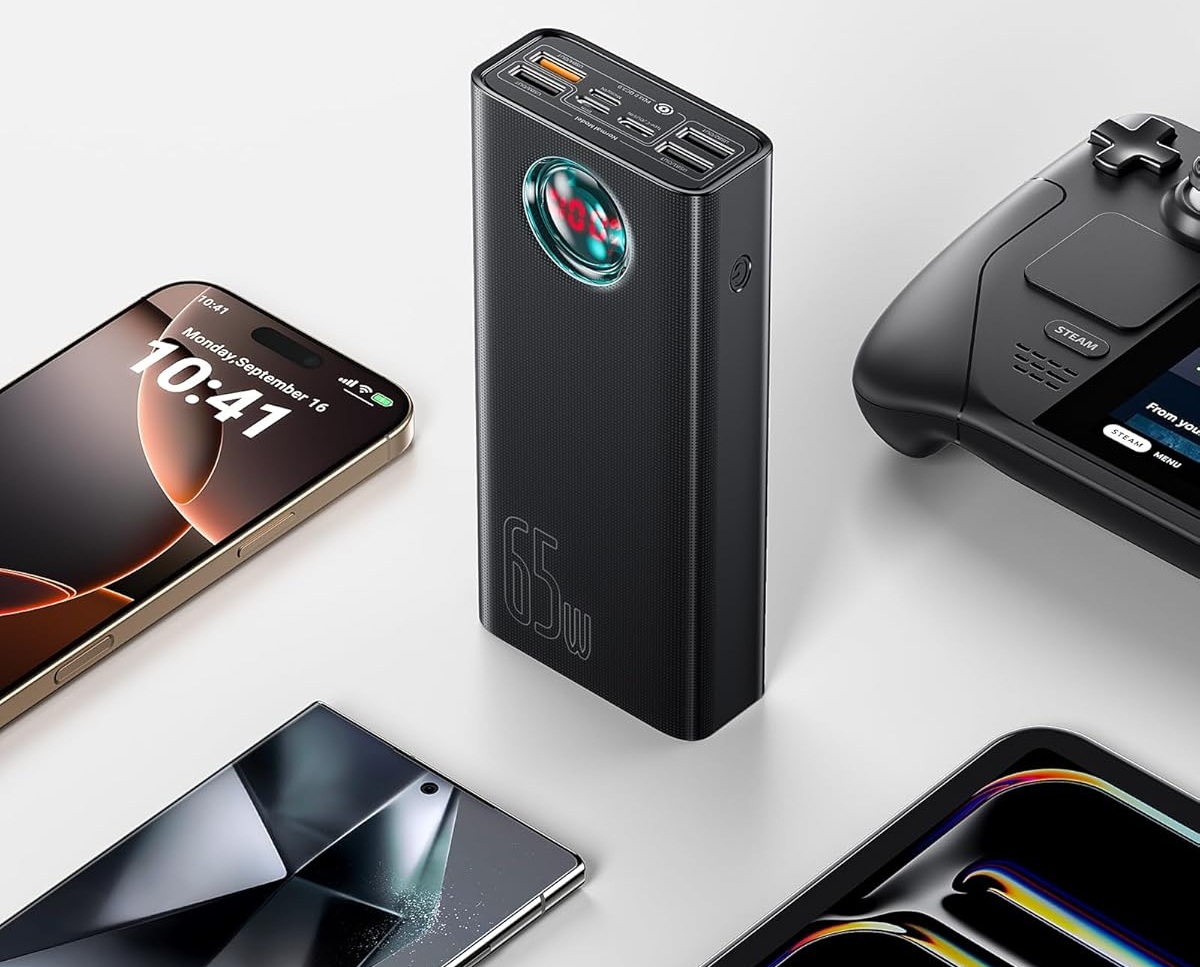
Portable gaming devices use a lot of power, so a regular 10,000 mAh power bank will not be enough. If you have a Nintendo Switch, a Steam Deck, or a similar device, choose something that supports at least 30 watts and has enough capacity for extended play sessions. The Baseus 65W 30,000 mAh Power Bank is a favorite among gamers because it easily handles handheld consoles while also keeping your phone charged.
More From GET WIRED UP NOW
Final Thoughts
A good power bank is one of the most useful gadgets you can buy, but choosing the right one depends on your lifestyle. Now that you know how capacity, wattage, ports, safety features, and convenience options work, you can feel confident choosing the perfect power bank for your needs.
If you want something for daily use, a smaller 5,000 to 10,000 mAh model is perfect. For frequent travelers, something around 20,000 mAh will serve you much better. If you want to charge a laptop, choose something with strong wattage and a higher capacity. And if you love the convenience of going cable free, a magnetic or wireless option might be exactly what you need.